Showing posts with label sewing. Show all posts

Sewing a Perfect Seam

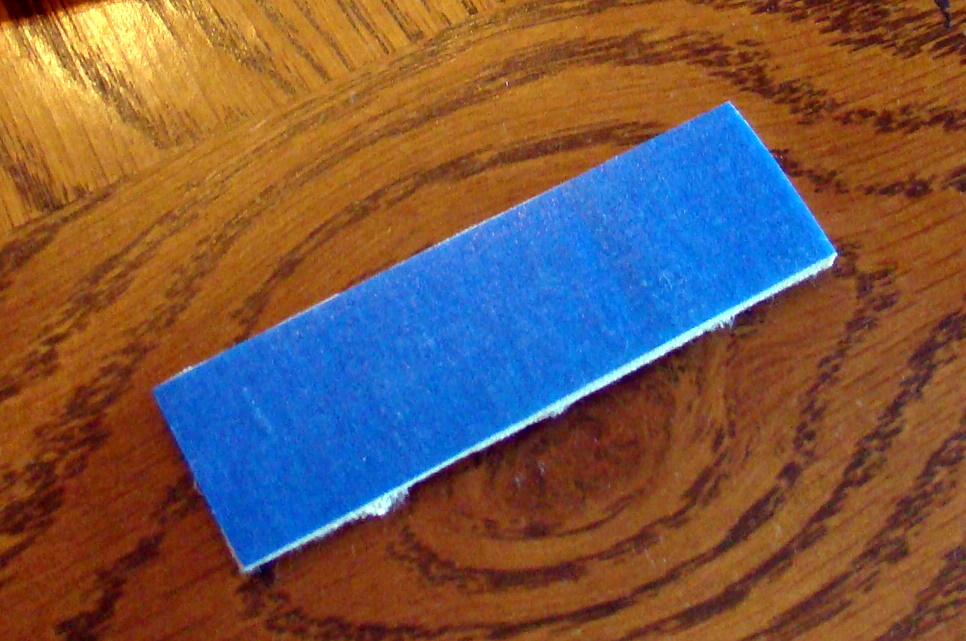
Blue painters tape is fantastic, but even better, Molefoam!  It gives an excellent ridge for the edge of your material.  One of my students commented that it would leave a residue behind, but if you use painters tape WITH the Molefoam there is no residue.  When sewing 1/4" seams, this is especially nice to have!

Molefoam from Walmart foot section, and this was a little thicker than what I'm used to buying, it was perfect.

Peel back the backing on the Molefoam and lay the non-sticky side of some painters tape on it.  Trim the edges and along the edge of the tape.

Stick the blue sticky side down along the guide on your sewing machine.

Put your presser foot down so you get as close to the needle as possible but without placing over the feeds.

See?  Perfect 1/4" seam.

When you're not using it, just stick it on the side of your machine.  When the tape wears out, you can just replace it.

~Jen

30 Minute Pillow Cases

7/8 yard fabric of your choice("case")
1/3 yard coordinating fabric("cuff")
matching thread
chalk or disappearing ink pen to mark
ruler or guide
scissors
rotary blade(optional)
pinking shears
sewing machine
iron
standard pillow form

You can wash your fabric if you like, I didn't after teaching this class to several kids(8-10 year olds) and have tweaked the instructions.  Turn fabric right sides together, matching selvage edges.  Trim up cut edges with rotary blade or mark with ruler and cut with sharp scissors.  Piece will measure approx. 22"x28".  Pin and sew 2 sides 5/8" seam, the selvage edge and one cut edge so you have a wrong-side-out-large pocket.  If the selvage edge designer markings/color swatches show when you turn it right side out, simply measure and sew again.  The exact measurement of this side is not important.  You will match up the "cuff" next. 

Fold the "cuff" piece wrong sides out and iron.  Trim up edges by cutting off about 1" on each side to make cuff approx. 10" wide.  Match the cuff's folded edge to the case's folded edge.  Mark with chalk or disappearing ink where the sewing line is and draw a line from cut edge to cut edge.  This will be your sewing line.  After you sew the cuff's selvage edge, press seam open and turn right side out.  You will have a large circle.  Fold wrong sides together now, lengthwise so cut edges of the cuff line up and all you see is the right sides, folded in half.  

Case should be turned wrong side out.  Place cuff inside case and line up cut edges of case and cuff together, lining up folded edge and sewn seams.  Pin into place.  Sew using a 5/8" seam until you meet your starting point.  Leave needle down and lift presser foot, and change stitch to a zig zag stitch.  Sew around the cuff again until you meet your starting point again.  Trim off excess fabric all the way around.  Using pinking shears trim up both sewn sides of case, snipping corners.  Iron the cuff/case seam towards the darker material.  Turn case inside out and using the tip of your marker push the corners out to get a nice sharp corner.  Iron.  Insert standard pillow form and VOILA!  Admire your work! 


~Jen

Twirl Certified Skirts


So here are the ingredients:
1. one measuring stick (or substitute for a 3x5 index card)
2. one of something to cut with (utility knife, sissors, teeth)
3. one sheet of cardboard at least 18"x5"
4. material (I use 5 different colors) - you'll need 15 inches of each
5. pineapple.  Not sure why that's there, but it looks good, right?
6. 1" elastic - cut to however round your waist is
7. pencil
8. sewing machine
9. stitch ripper (not because *you* need it but because *I* need it)
10. paddle (to threaten children who take your scissors to bring them back)


Skirts...

I get asked all the time how I make these cute skirts. People are so convinced they can't make them, but trust me, if "I" can make them, anyone can!

Start out with 3-4 different fabric choices. I usually do about 1/2 yard of each color, or two fat quarters would also work.
Prewash, iron, then lay out flat on a cutting mat. I sometimes will use a template I cut out of posterboard, but usually I just use the lines on the cutting mat. Use a rotary cutter to cut them quickly. The panels are usually 3" wide at the top and angle down to 6" or so at the bottom. If it's for an adult, I make it a bit wider, a child, a bit smaller. Or if you want a really full skirt, make it a lot wider at the bottom. Clear as mud?

Or you can do perfect rectangles and make more of a straight skirt.
Lay them out in whatever pattern you like. I choose whatever color I'm using on the bottom edge and do a couple of panels in the skirt, but it's all up to you.
If you don't have a serger, zig zag the edges, this will keep all these panels from fraying down the line. Nobody wants to be sitting in church and having a bunch of threads hanging off you. Iron all the seams down, too.
Depending on how long you want your skirt, I cut a strip of material anywhere from 3-6" in length to sew around the bottom. You can also add one at the waistband... sometimes I do, sometimes I don't depending on how much material I have. The strips usually have to be sewn together to make one really long one (especially if you are using fat quarters).
Add the elastic waistband.
Two or three hours later, you'll have this...
Here's a second one I did this weekend, also. It's more of a "pencil" skirt (I think that's what they are called?), not full at all.
Super cute. Super easy.

~kris
Related Posts Plugin for WordPress, Blogger...